


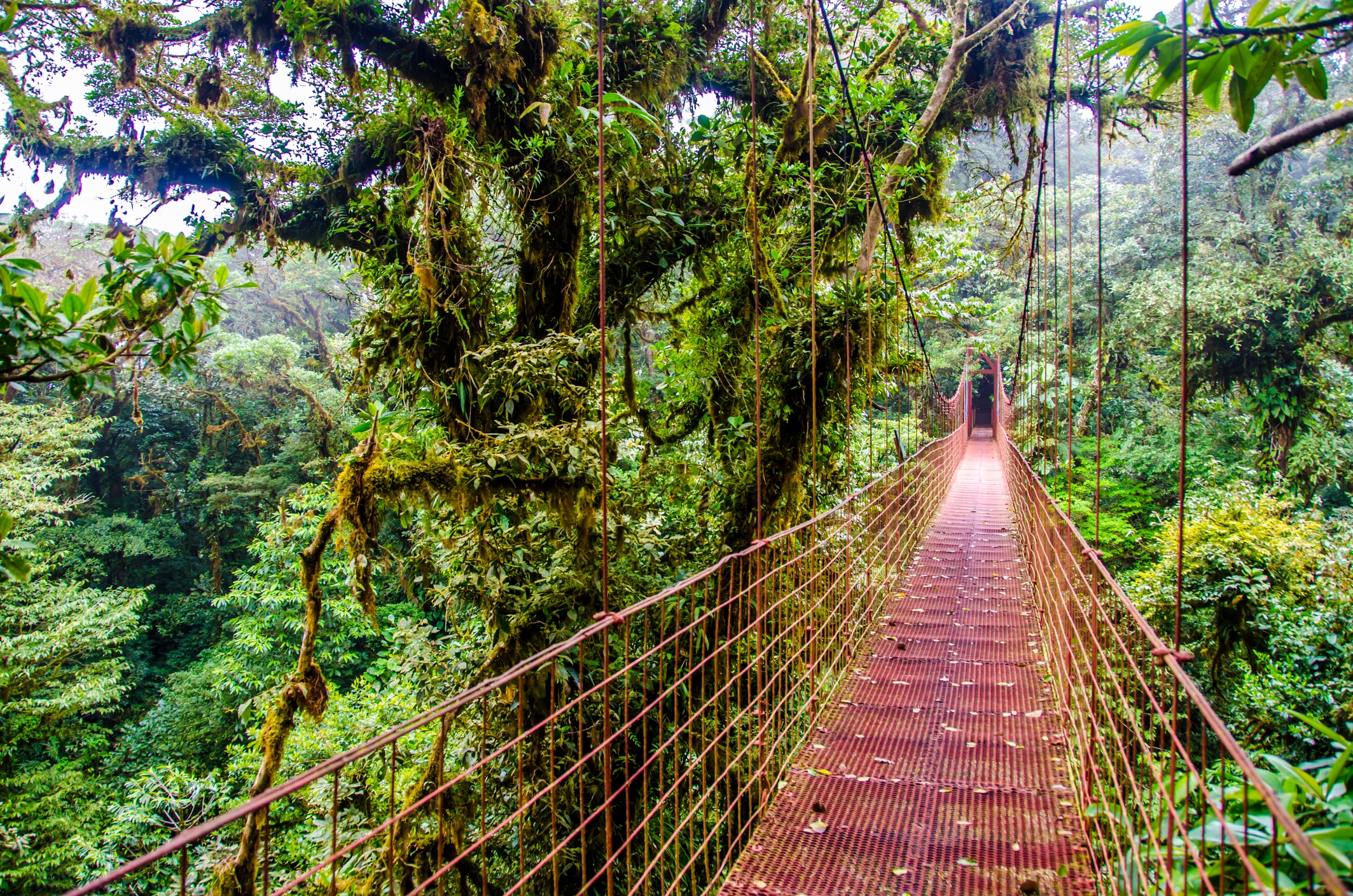
Monteverde cloud forest sits high in the mountains of central Costa Rica. This region attracts nature lovers and bird watchers from all over the world. It offers a unique environment that you cannot find on the warm coastal beaches. The high altitude creates a cool, damp climate that supports rare plant and animal life.
Visiting this area requires some physical effort and good planning. You will spend most of your time walking outside on uneven dirt paths. The weather changes fast, and the mountain terrain presents specific challenges for travelers.
This guide covers everything you need to know before you travel up the mountain!
What To Know About the Monteverde Cloud Forest
Getting to Monteverde
Driving to Monteverde is an adventure on its own. The town sits about three hours away from the capital city of San Jose. For many years, the only way up the mountain was a rough, rocky dirt road. The government has paved some sections, but the final stretch remains unpaved and bumpy.
You should rent a 4×4 vehicle to make this drive. A car with high ground clearance handles the deep potholes and loose gravel much better than a small sedan. The drive includes steep hills and sharp curves with steep drop-offs on one side.
Do not attempt to drive up the mountain after the sun goes down. The mountain roads lack streetlights, and thick fog often reduces visibility to near zero. Plan your travel schedule so you arrive at your hotel in the middle of the afternoon.
Download offline maps on your phone before you leave the main highway. Cell phone service drops out completely in the rural mountain areas, and a downloaded map keeps you on the right path.
Choosing Between the Reserves
Most tourists do not realize that the area contains several different nature reserves. The Monteverde Cloud Forest Biological Reserve is the most famous location. It features well-maintained trails, clear signs, and a large visitor center. Because of its fame, it draws the biggest crowds and sells out of entry tickets fast.
The Santa Elena Cloud Forest Reserve sits higher up the mountain. This extra elevation makes it wetter, colder, and more rugged than its famous neighbor. The trails here have more mud and tree roots, which requires more physical effort to navigate.
Santa Elena offers spectacular views of the Arenal Volcano on clear days. It also receives fewer visitors, giving you a quiet and peaceful walk through the woods. The dense vegetation makes it a bit harder to spot birds, but the plant life is spectacular.
Visit the Santa Elena Reserve on busy holiday weekends or during peak tourist season. You will avoid the loud tour groups and experience a more authentic walk through the quiet woods.
What to Wear and Pack for the Weather
The weather in Monteverde surprises many first-time visitors. People expect Costa Rica to be hot and sunny everywhere. However, the temperature here stays cool all year, averaging around 65 degrees Fahrenheit (18 degrees Celsius). Wind and mist make the air feel much colder.
You must pack layers to stay comfortable on the trails. Start with a breathable t-shirt, add a warm fleece jacket, and top it off with a waterproof rain shell. You can remove layers as you warm up from hiking up the steep hills.
Good footwear is mandatory for this region. You need waterproof hiking boots with strong traction to handle the wet rocks and deep mud. Leave your casual white sneakers in your suitcase, because the trails will ruin them in ten minutes.
Bring a small microfiber towel in your backpack to wipe moisture off your camera lens. The constant mist in the air covers glass surfaces fast, which ruins photographs of the birds and trees.
Spotting the Elusive Quetzal and Wildlife
The Resplendent Quetzal is the most sought-after bird in Central America. It has bright green feathers, a red chest, and a long tail. Bird watchers travel to Monteverde specifically to see this rare creature in its natural home.
Finding wildlife in a cloud forest presents a major challenge. The vegetation grows thick, and the animals hide deep inside the green leaves. The constant mist also reduces your line of sight.
You will see more plant life than large mammals on your hike. The tree branches hold hundreds of small orchids, mosses, and ferns. You might spot small frogs, unique insects, and howler monkeys if you look close enough.
Hire a local naturalist guide at the park entrance for your first hike. They carry large spotting scopes and know the exact trees where the quetzals feed, which guarantees you a better chance of seeing the animals.
Experiencing the Canopy (Ziplines and Bridges)
Monteverde is the birthplace of the modern zipline canopy tour. You will find several adventure parks located just outside the main reserves. These parks offer thrilling rides high above the forest floor.
Ziplining gives you a fast, exciting view of the environment. You wear a harness and slide across long steel cables that connect the mountain peaks. It provides an adrenaline rush and a vast view of the rolling green hills.
If you prefer a slower pace, you can walk across the hanging suspension bridges. These metal bridges span the deep canyons and put you right at eye level with the treetops. This elevation lets you see the birds and monkeys that never come down to the ground.
Book the earliest morning time slot for your hanging bridge walk. The birds are most active right after sunrise, and the afternoon fog has not yet rolled in to block the canyon views.
Conclusion
A trip to the Monteverde Cloud Forest offers a contrast to the warm Costa Rican beaches. It immerses you in a cool, green environment filled with rare plants and birds. The landscape feels ancient and untouched.
Preparation determines the success of your mountain visit. Bring the right waterproof gear, rent a strong vehicle, and wake up early to beat the crowds. These small steps make a big difference in your comfort level.
The local community works hard to protect this fragile ecosystem. Visitors must stay on the marked trails and carry out all their trash to help preserve the forest!